


















SEC Cross-Trading Proposal | Fred Teufel Insights
Vigilant Insights
Introduction
The SEC has Proposed Amendments to Rule 17a-7 under the Investment Company Act of 1940 that would expand the types of Securities eligible for Cross-Trading between Registered Funds and certain Affiliates.
The Proposal would restore the ability to Cross-Trade most Fixed-Income Securities, which have been largely restricted since the SEC’s adoption of Rule 2a-5 narrowed the securities eligible for cross-trading.
While the Proposed changes could help Funds reduce transaction costs and improve portfolio management, they would also introduce additional compliance oversight, pricing validation, and reporting responsibilities for Investment Advisers and CCOs.
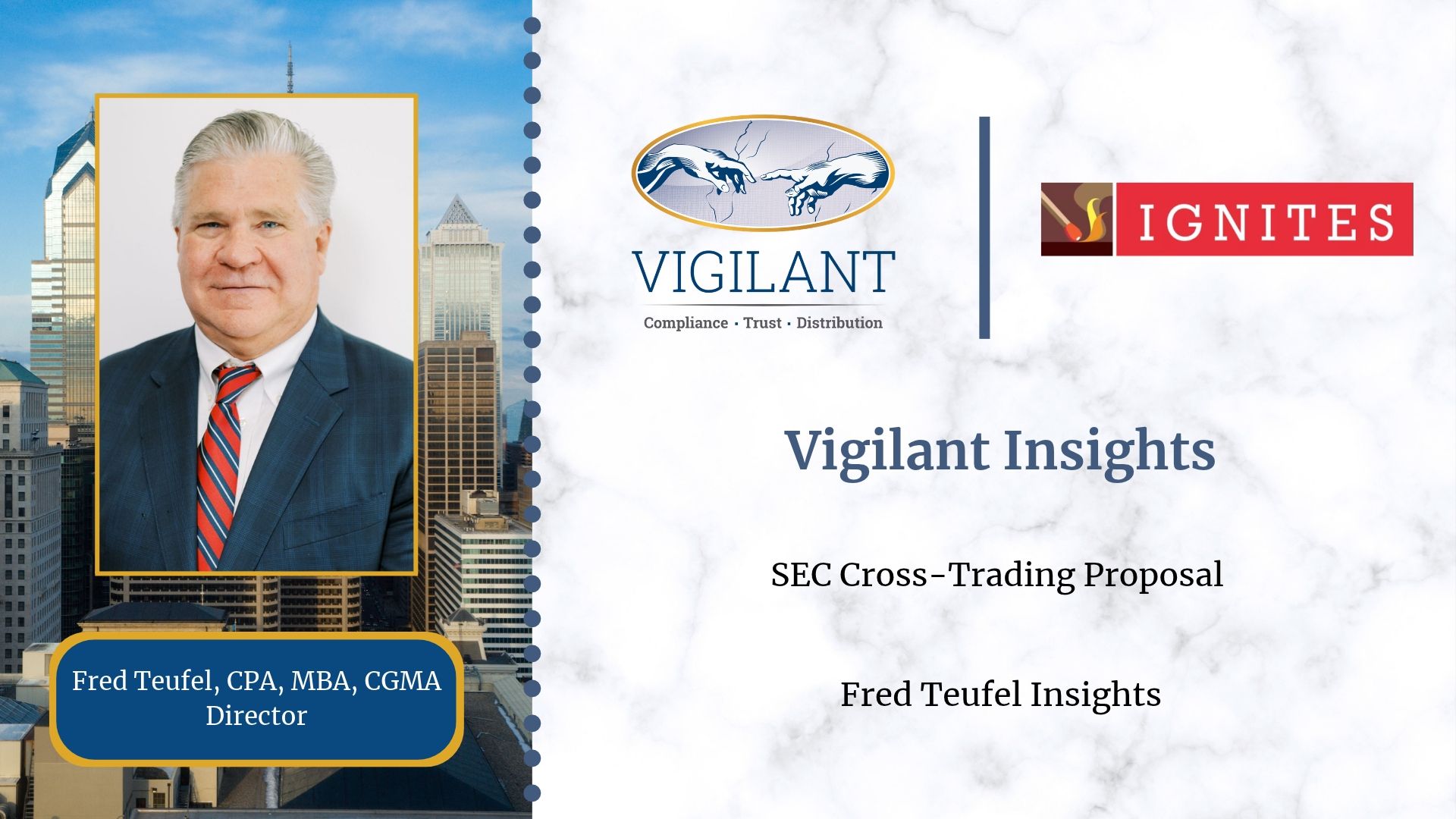
Vigilant Director, Fred Teufel, CPA, MBA, CGMA, shared his perspective with Ignites on the Operational and Compliance Considerations associated with the SEC’s Proposal, including the challenges of back-testing Cross-Trades and the potential impact on smaller Advisers.

Fred Teufel Insights
Fred emphasized that Investment Advisers, rather than CCOs, will likely perform most of the analysis associated with the proposed back-testing requirements. While Compliance Professionals are qualified to evaluate the process an Adviser has established, Fred noted that typically they are not necessarily the most qualified to conduct the back-testing themselves.
Fred also highlighted potential pricing concerns under the Proposal. Because Advisers could price Cross-Trades based on the value of the security used in the next computation of asset value (NAV) or a price determined by the Investment Adviser that reasonably represents the current market price for the security using unaffiliated pricing sources, the choice of method and the application of the selected method could create opportunities for regulators to use hindsight in arguing that a Fund was disadvantaged. As Fred explained, pricing a security using a value other than a market closing price could provide Advisers with “a bit of wiggle room.”
Additionally, Fred pointed to differences in access to market information between large and small Advisers. Larger Advisers generally have more access to real-time data on observable inputs such as dealer quotes and spreads because of the volume of business they conduct with counterparties, while smaller Advisers may need to seek out that information. These differences could make it more difficult for smaller Firms to obtain the information needed to support their Cross-Trading practices.

Vigilant’s Conclusion
The SEC’s Proposal could expand Cross-Trading opportunities for Registered Funds while introducing additional compliance risks since the Proposal sets more prescriptive expectations for compliance oversight, pricing, and documentation. Although some of the Proposed oversight practices may already be incorporated into existing compliance programs as an element of a Registered Fund’s 2a-5 compliance policies and procedures, the Proposal adds additional compliance risks such as: best interest, valuation and governance risk management, surveillance and forensic testing, recordkeeping and evidentiary risk and conflicts management risk across affiliated accounts as well as potentially significant operational risk for Firms that engage in Cross-Trading.
Registered Funds and their Advisers should evaluate how their current governance, trading, pricing, and compliance processes would address the proposed requirements, keeping in mind that prices used to value a cross-trade today can be challenged years after execution Advisers will have to determine:
- Who will perform the back-testing;
- What trade-level data and pricing information will be available;
- How the Adviser will document its best-interest determinations; and
- How the CCO will review and report on cross-trading activity.
Smaller Advisers, in particular, may need to assess whether their existing systems and access to observable inputs would support these processes. Since the Proposed Rule is in the comment period, Firms should monitor the status of this proposal and evaluate the final requirements before making changes based on the proposal.
At Vigilant, we recognize the importance of aligning compliance oversight with a Fund’s trading activities, operational capabilities, and regulatory obligations. A proactive review of these areas can help Firms identify potential gaps and prepare for regulatory changes while maintaining appropriate oversight of cross-trading activity.
To learn more about Vigilant’s Compliance Services and how we can support your Firm, schedule a call with our team by clicking the Contact Us button below.